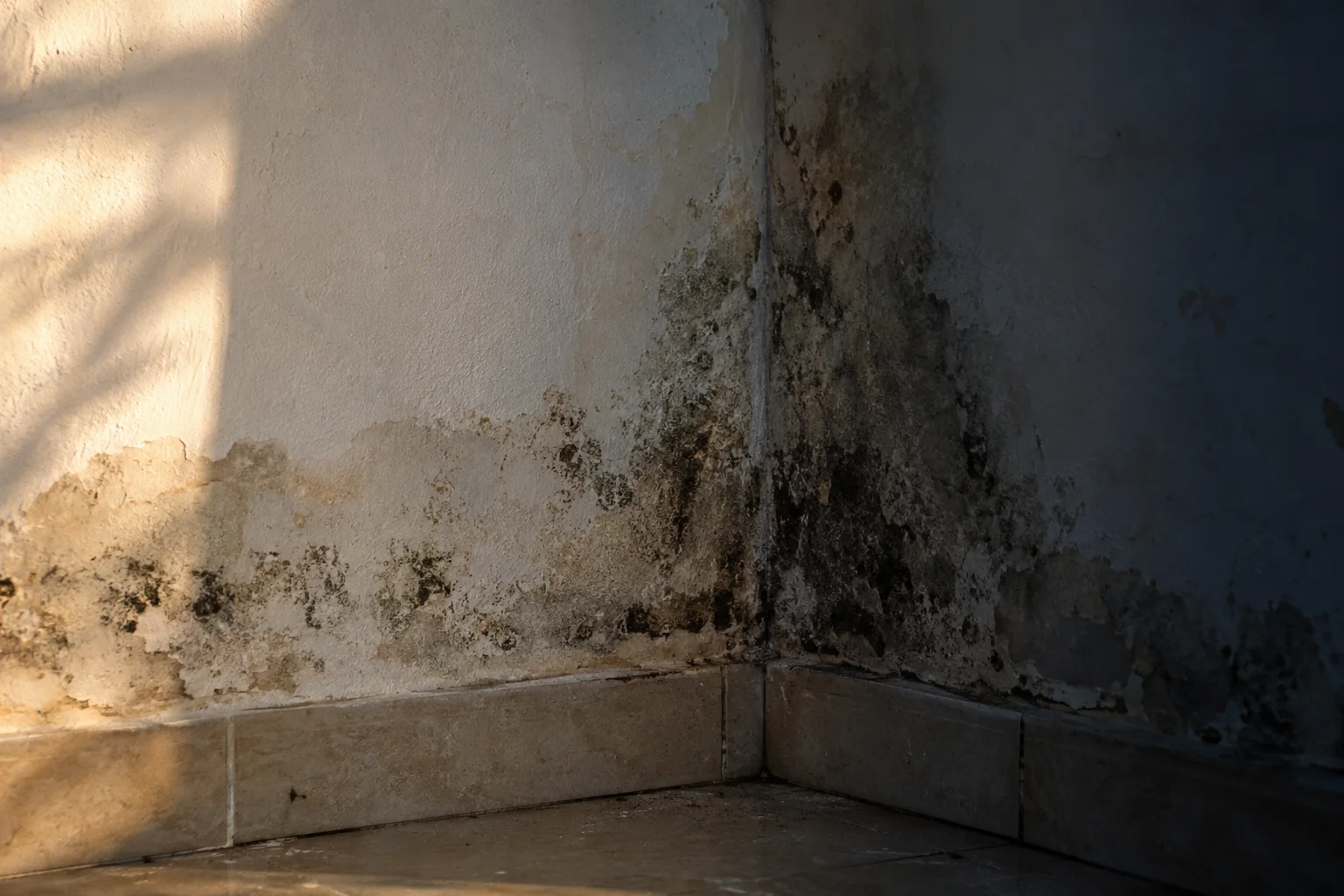
Understand the problem.
Agree the right work.
Cleaning suitable hard surfaces can be part of the solution. Porous materials such as damaged plasterboard or insulation may need removal when growth cannot be safely cleaned. The scope should be agreed after inspection, rather than decided from colour alone.
For occupied homes, access and isolation matter. We discuss how the work area can be separated and whether occupants should avoid it while removal is underway. The approach depends on the extent of contamination and any particular occupant sensitivities.
Visible improvement is only one part of the handover. We explain the moisture repairs, drying checks and maintenance actions relevant to your property so that repainting does not conceal an unresolved problem.
Peyia: planning your assessment
Include whether the affected wall is below ground level or beside a terrace. Tell us about past waterproofing work and any change in the stain after storms.
Photograph the affected interior and the corresponding outside area where it is safe to do so. Avoid climbing onto roofs to collect images.
Nearby properties
We discuss coverage in Coral Bay, Sea Caves, Kissonerga and the surrounding Paphos area. Share your exact location and access details when you get in touch.
Questions about mould removal
Can mould be removed permanently?+
Growth can be removed, but recurrence depends on controlling moisture. No contractor can eliminate all airborne mould spores; the practical goal is a dry, repaired property without active growth.
Do I need to identify the mould species?+
Routine species testing is often unnecessary where visible mould or a moisture problem already needs attention. We assess the affected materials and moisture source; specialised testing can be discussed if there is a specific reason.
Do you cover nearby areas around Peyia?+
We discuss visits in Peyia and nearby Coral Bay, Sea Caves, Kissonerga. Send the property's exact location so we can confirm access and availability.
What should I send about my Peyia property?+
Photograph the affected interior and the corresponding outside area where it is safe to do so. Avoid climbing onto roofs to collect images.